

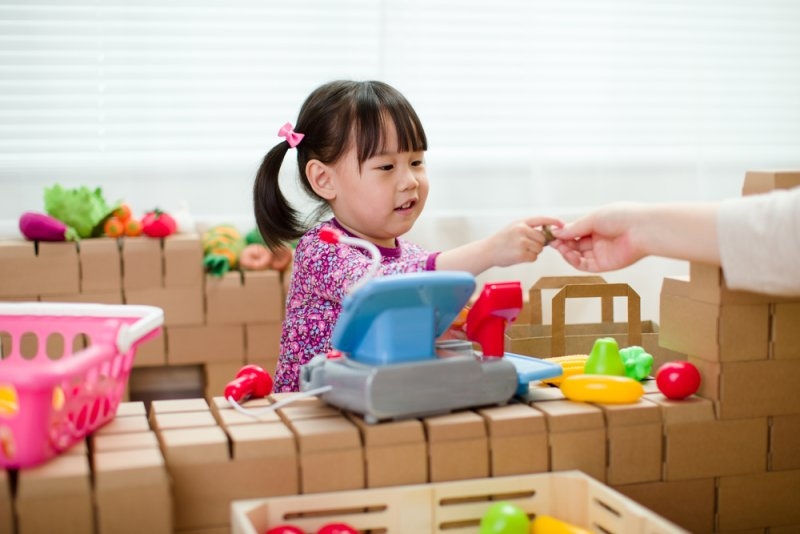
A child can transform just about anything into an object of storytelling. A cardboard box is easily turned into a bus, a blanket into a tent, and a toy animal into a sick kid at an imaginary clinic. Whether you are in search of pretend play ideas for toddlers or want something easy to do at home, you will find here some fun activities requiring no special preparations.
Through pretend play, children have an opportunity to mimic their previous experiences and create new ones. The child who acts out a restaurant role-play activity can practice ordering, describing things, counting objects, and interacting with other individuals.
Such experiences can be useful for developing vocabulary, cooperation skills, decision-making, imagination, and emotional development in the child. Children also have an opportunity to experience new situations, for instance, going to see a doctor, the first day at kindergarten, travelling, and looking after babies.
Also Read: Best Problem-Solving Games for Kids to Build Thinking Skills
Toddlers tend to be fascinated by brief plays that revolve around things they are familiar with. It might include imitating adults, performing an action, or creating an imaginary use for the object.
An ordinary table turns into a restaurant with food boxes, dishes, napkins, and cups all clean and safe. The role of a customer belongs to you, and a cook or waiter to your toddler. Invite your child to take an order, invent a dish, and serve it.
Find some stuffed toys or draw some animals that can be lost, sleepy, hungry, or needy for some assistance. Here, your toddler will take the part of a veterinarian. Thus, the pretending game will develop your toddler’s nurturing and storytelling skills.
It is possible to use any doll, soft toy, or even a rolled-up blanket as a baby. Invite your child to feed, dress, soothe, and put the baby to sleep. Do not tell your child what he or she does not do right; instead, find out what the baby wants.
Set up some safe items from around the house on a table for your child and pretend that you're in a grocery store. Your child can pick things they need and put them in a bag and pretend to buy them. Teach your child numbers as well.
Preschool-aged children should be able to handle longer stories, multiple characters, and more complex situations. Below are some pretend play suggestions for preschool-aged children that can foster planning, communication, and cooperation.
Make your pretend doctor’s office out of paper, a blanket, and other household items. The children will act as doctors, patients, nurses, and receptionists. They may schedule appointments and conduct examinations on their patients.
Arrange chairs into a row to create your spaceship. Cardboard and paper buttons will be used for controls. Pick a location as well as some problems for the crew to overcome. The children will have to discover a new planet, repair their spaceship, or assist other crew members.
Make envelopes out of paper and place them inside small boxes. The children will draw their own letters and deliver them around the house. The game combines play with early writing, sorting, and communication practice.
Spread a blanket across chairs to create a tent. Pretend to pack supplies, cook dinner, tell stories, and search for imaginary animals.
Every activity doesn’t require preparation. Easy role-playing games for children can be started with one thing or one question.
This game includes the idea that some parts of the floor are dangerous. Children navigate through pillows or open spaces on the floor, trying to avoid the imaginary lava. Be sure that there are no sharp objects, unsafe furniture, or other things that might cause falling. Change this game depending on the age of your child.
Give your kid an imaginary microphone made of paper, or let them use their hand as the microphone. Make your child a weather reporter describing the weather in various places. It might be a storm in the mountains, sunny weather at the beach, or snow in the city.
A blanket fort will serve as the headquarters. Kids will come up with superheroes’ names, superpowers, missions, and other details.
You do not need lots of toys for imaginative play. Pretend play games without the use of toys may depend only on body movements, discussions, and imagination. Let children pretend that they are explorers who have found a new island, and allow them to choose whatever they see, eat, and the way back home.
One more idea for playing is to pretend that you are at an imaginary hotel where one child is a guest and another one is a receptionist. Children may also play in a mystery house where ordinary rooms have secret doors, treasure, and even animals living there.
Objects from around the house can be made into very handy props. The box can become a car, train, boat, rocket, shop counter, or even an animal den. The scarf can be turned into a cape, the blanket into a tent, and the paper into tickets, maps, menus, or signs.
Remember always to provide clean and safe items to play with and to exclude all sharp, fragile, and small items that can pose a choking hazard. All these creative dramatic play ideas for kids function well because children make most of the storyline themselves.
Dramatic play can include several children and allow them to develop their cooperative skills. Create a pretend airport where the children will be taking different roles of passengers, pilots, ticketing officers, or employees of the airport.
It can also be a pretend construction site where the children can become builders, project managers, or deliverymen solving all imaginary problems.
The pretend school will also do perfectly fine. The children can take turns being teachers or students, creating their class rules. All these dramatic role-play ideas for kids teach turn-taking, listening, negotiating, and communication skills.
When there is no sun outside, or you need something indoors, engage children with pretend activities inside your house. Pretend that your living room is an airport, your bedroom is a hotel, and the hallway is a train station. Provide your kids with some tasks to do.
Another option is a pretend bakery. Use paper-made desserts and empty jars for that purpose. Kids will take orders, cook, and serve the food. Just a couple of hints are enough to start the story.
Imagination games can be supported without interfering. First, notice the child’s interests and use them as a basis to create activities. Use open-ended questions like “What do you think comes next?” or “How do you think we can solve this problem?” Do not give the child all the answers; let them figure out what will happen.
Join the game when invited, but don’t keep correcting the story. Have a box of scarves, paper, cardboard, boxes, and bags ready for impromptu imaginative play at home.
Must Read: Constructivism In Education: A Simple Intro For Teachers
Pretend play concepts provide kids with a very flexible way of discovering stories, connections, feelings, and real-life situations. Whether it is doctor visits or supermarket runs, space trips or superhero missions, the usual settings around the child can be transformed into imaginative learning opportunities.
The simplest games often just require a box, blanket, paper, or even just an adult asking, “What’s next?” The best part about that is that imaginative play becomes really easy when it just follows the interests of the child.
Imaginative play may start during toddlerhood and be elaborated upon during the preschool stage of development. Small children copy their everyday actions, while older children come up with stories.
Provide short play sessions, follow his/her interests, and introduce new elements step-by-step. Switching roles, adding a difficulty, or leaving some room for decision-making will do the trick.
Sure, joint imaginative games allow siblings to practice communication skills, take turns, cooperate, negotiate, and solve problems while building stories.
No. Children can create imaginative scenarios using household items, clothing, paper, boxes, blankets, and everyday objects. Fewer defined props can encourage children to invent their own uses.
Parents can participate when the child wants them to, but children should have opportunities to lead. Asking questions, accepting their ideas, and playing a supporting role can encourage creativity without taking control.
This content was created by AI