

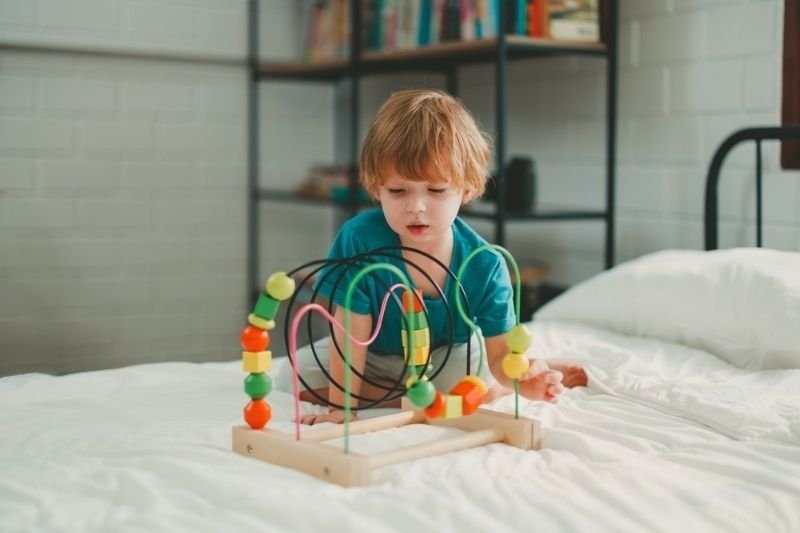
A child is engaged in problem-solving activities every day—deciding the next block to place on a tower or figuring out how to find a lost teddy. The games and activities on this page make everyday solutions fun, but they allow kids to try out different ideas in a less pressured environment, learn to take risks, and learn that mistakes can happen.
The learning comes from trying to sort out a problem using whatever tools or concepts they have available.
Let’s face it; the problem-solving games for kids don’t need to be anything special to make learning about figuring things out. The simple, classic activities below may just be the solution, whether you modify them as needed or play them once or many times in any age range. For each activity, we’ve included the critical thinking skills they strengthen.
The Activity: Provide kids with LEGOs or other building toys and challenges such as building the tallest tower possible, making a bridge that supports a toy “car,” or designing an animal home.
Critical thinking skills practiced: creativity, planning, spatial reasoning, trial-and-error, and decision-making.
The Activity: Empty a bag of odds and ends such as buttons, craft sticks, beads, tiny toys, and ask kids to sort by color, shape, or toy type. Have the kids create their own pattern of materials for their friends to continue the sequence.
Skills to Develop: Sorting, Critical Thinking Games, Observation Skills, Logic.
The Activity: Offer your child age-appropriate riddles and encourage them to work on them collaboratively, if need be. For slightly older children, you might write a simple mystery with clues: solving one will indicate where to find the next clue.
Critical Thinking Skills to Practice: Abstract Thinking, Vocabulary, Critical Thinking, and Memory.
The Activity: Children complete a jigsaw or draw one. Have them start one, get lost in the maze, and find their way. You can also use match-the-pairs games for little ones.
Critical Thinking Skills Practiced: Spatial awareness, attention to detail, memory, planning, and patience.
The Activity: Create a list of items that need to be found around a house or yard. Instead of direct instructions, write clues such as “What keeps you warm indoors?” or “Look for something green and leafy.”
Critical Thinking Skills Practiced: Problem-solving, reasoning, communication, literacy, logic puzzles for kids
The Activity: The most popular memory game is a matching game where kids try to find pairs of cards. More complex strategic games involve chess and other board games or role-playing games. Kids and the elderly can play games like Simon Says or Boggle to improve their brain development and memory capacity.
Critical Thinking Skills Practiced: memory, planning, abstract thought, logic and reason, and strategy.
Problem-solving games help young kids compare options, hypothesize about causes and effects, change approaches when things don’t go as planned, and experiment without the pressure of getting things right away. These brain games for kids support problem-solving with benefits including increased resilience, boosted attention, and improved decision-making skills.
These experiences provide many chances for creative kids' games to be incorporated, such as when you ask your child to tell why they picked an option or tried what didn’t work. You’ll find that you have opportunities for critical thinking games all around you as your child problem-solves to figure out why.
For your critical thinking games for kids to be successful, be mindful that they shouldn’t just aim for a particular “right” answer. You’ll make these problem-solving opportunities for kids even more effective:
Encourage children to come up with multiple answers; there might not be only one way to reach the solution. Let the children lead playtime and test out their own solutions no matter how simple. The process should be enjoyable. The children themselves will learn how different results from various solutions can still come out as a solution!
Remember these practical tips:
From logic games and silly critical thinking games and mind games to more serious problem-solving opportunities for kids and creative puzzles and logic games for children, there are so many problem-solving games for kids to boost your child’s ability to problem-solve in fun, engaging ways.
You don’t have to spend money on complicated or expensive materials. With a little imagination, you can create opportunities for your children to experiment, persist when faced with a challenge, and celebrate their victories along the way, no matter how big or small.
They encourage them to use logic, make choices, remember, plan, be creative, pay attention and think, persevere, compare alternatives, notice connections and themes, share with people what they think, and re-examine strategy.
Of course it does, but on a much simpler level. They have all sorts of opportunities to play: stacking blocks, matching and sorting games, shape play, I-spy, etc. Their problem-solving play should be short, safe, and in keeping with their developmental stage.
Short, simple games and riddles can occur naturally during learning center time, group time, during a quiet period in the classroom, or during transitions. Building games, puzzles based on them, or cooperative games are very beneficial in creating opportunities for discussion and explanation of their idea.
No, especially cooperative activities offer a learning environment where kids can share ideas, learn how to listen, plan what needs to be done, and learn how to solve the problem. Sharing ideas instead of competing would be part of learning too.
If a child is getting frustrated, either the activity is too difficult for him, or you just need to give them a rest and some time out. Just give a little hint in case they need support, but let them find the solution on their own in case they wish to proceed.
This content was created by AI