

If learning worked the way some people imagine, teachers would explain something once, students would nod, and everyone would go home early. Reality is messier. A student can hear a perfect explanation and still not “get it” until they try, fail, ask a friend, connect it to something familiar, and try again. That’s not stubbornness. That’s how understanding forms.
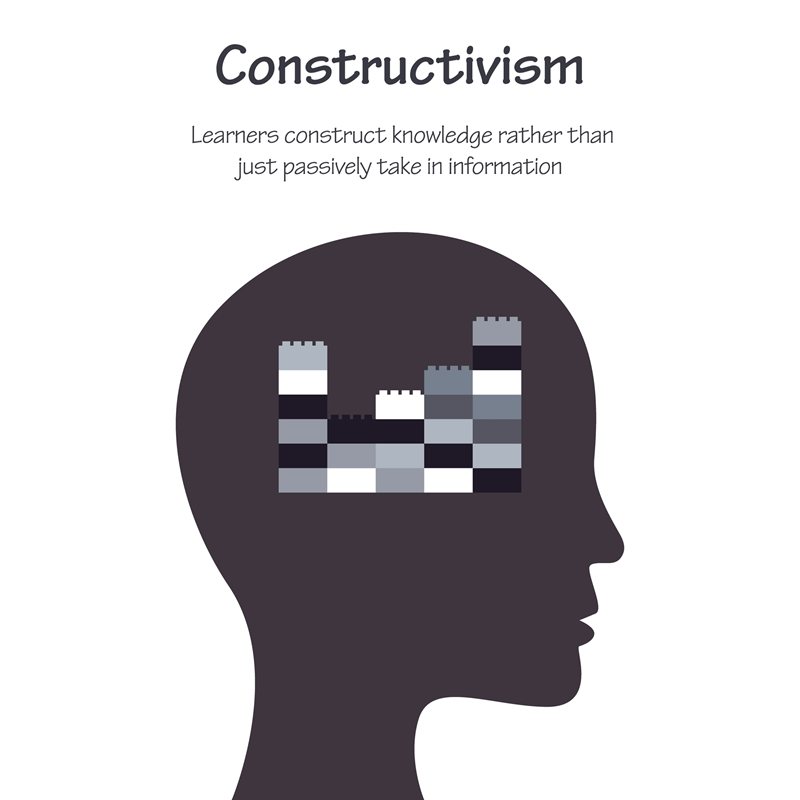
That’s basically what the theory of constructivism in education is saying. Students don’t absorb knowledge like a sponge. They build it. They shape it. They revise it. Sometimes they build the wrong thing first. Then they rebuild.
And honestly, that’s the whole point.
The big idea is simple: learners create meaning by connecting new information to what they already know. That could happen through hands-on activities, discussions, problem-solving, or reflection.
So if someone asks what is constructivism in education, the most practical answer is:
It’s teaching in a way that helps students make sense of ideas for themselves, instead of only memorizing someone else’s explanation.
This doesn’t mean teachers stop teaching. It means teachers stop doing all the thinking.
Traditional instruction often follows a clean pattern:
That works for some things. But it can break down when the goal is deep understanding. Students may memorize steps without knowing why those steps work. Then the moment the problem changes slightly, they freeze.
That’s where constructivism in education tends to shine. It pushes students to wrestle with ideas and form connections, so the learning can travel to new situations.
Must Read: 20 Creative Indoor and Outdoor Activities for Kids in 2025
Every student walks in with a mental file cabinet already stuffed. Some files are accurate. Some are messy. Some are wrong but labeled “FACT” in bold letters. Constructivism takes that seriously. Learning isn’t starting from zero, it’s updating what’s already there.
Example: a student believes seasons happen because Earth is closer to the sun in summer. A teacher can correct it, sure. But if the student never confronts why that belief fails, it can stick around quietly. A constructivist approach might have students explore models, compare hemispheres, discuss what the data suggests, and then rebuild their understanding. That’s learning with roots.
People talk about constructivism theory in education like it’s one thing, but it’s more like a family of ideas. Two versions show up a lot.
This focuses on how an individual builds understanding internally. Students revise their mental models by exploring, noticing patterns, and reflecting.
This focuses on learning through interaction. Students build meaning by talking it out, debating ideas, and learning in community.
In most classrooms, both are happening. A student thinks alone, then talks in a group, then revises their thinking. That loop is powerful.
The constructivism philosophy in education tends to value:
It’s basically saying: if students can explain the “why,” the “what” becomes easier to remember.
This part matters, because constructivism is often misread as “teachers do less.” Not true.
In a constructivist classroom, the teacher is still steering the ship. They:
The teacher becomes a designer of learning, not just a speaker of content. More behind-the-scenes work, less nonstop talking.
Here are examples of constructivism in education that work in real schools, with real time limits, and real students who sometimes forget their pencil.
Instead of defining “conduction” first, students test materials:
Which spoon heats up fastest in warm water?
They predict, test, observe, and explain. Then vocabulary like “conductor” and “insulator” lands better because it attaches to something they experienced.
Give a problem like:
How many tiles cover this area?
Students sketch, estimate, break it into parts, and explain methods. After that, teaching the formal area formula feels like naming something they already discovered.
Students discuss a story using prompts like:
They build interpretations together, which deepens comprehension beyond “find the main idea.”
Instead of handing out a summary, students look at a few short sources and answer:
They learn to reason, not just repeat.
None of these remove structure. They shift where understanding gets built.
Constructivism gets unfairly blamed for messy teaching when it’s used poorly. So let’s be clear.
It is not:
Good constructivist teaching still includes practice. It still includes clarity. It still includes correction. The difference is students are involved in making meaning, not just copying it.
Not every lesson needs a big project. Constructivism can show up in small moves.
Try this:
Even five minutes of student thinking can change how a lesson lands.
Assessment still matters, but it looks beyond recall.
Constructivist-friendly checks include:
The goal is to see understanding, not just memory.
Must Read: How to Make STEM Learning Fun and Exciting for Kids
Information is cheap now. It’s everywhere. The real skill is making sense of it. Connecting ideas. Testing claims. Explaining reasoning. Applying learning to new problems. That’s why the theory of constructivism in education stays relevant. It supports the kind of thinking students need outside school too.
And it reminds teachers of something important: students learn best when they are part of the learning, not just sitting near it.
It’s teaching that helps students build understanding by exploring ideas, connecting them to what they already know, and explaining their reasoning.
Yes. Direct instruction works well after exploration to clarify concepts, correct misunderstandings, and give students strong structure.
Quick examples include prediction questions, hands-on mini experiments, group discussions with evidence, and problem-solving before teaching the formula.
This content was created by AI